
A VTuber is short for “Virtual YouTuber”—a creator who streams or makes videos using a 2D or 3D virtual character. On the surface, it looks like an animated character talking and moving on its own, but behind the scenes, a real person is providing the voice and controlling the character through motion capture.
The term originally came from creators on YouTube, which is why it’s called “Virtual YouTuber.” Today, creators on Twitch and other platforms are also commonly referred to as VTubers, regardless of where they stream.
Where Did VTubers Come From?
VTubers as we know them today originated in Japan. In late 2016, Kizuna AI began uploading videos on YouTube and introduced herself as a “Virtual YouTuber,” a term that quickly caught on.
After Kizuna AI’s success, creators using similar formats rapidly increased, dedicated agencies were formed, and VTubers evolved from a novelty into a full-fledged industry.
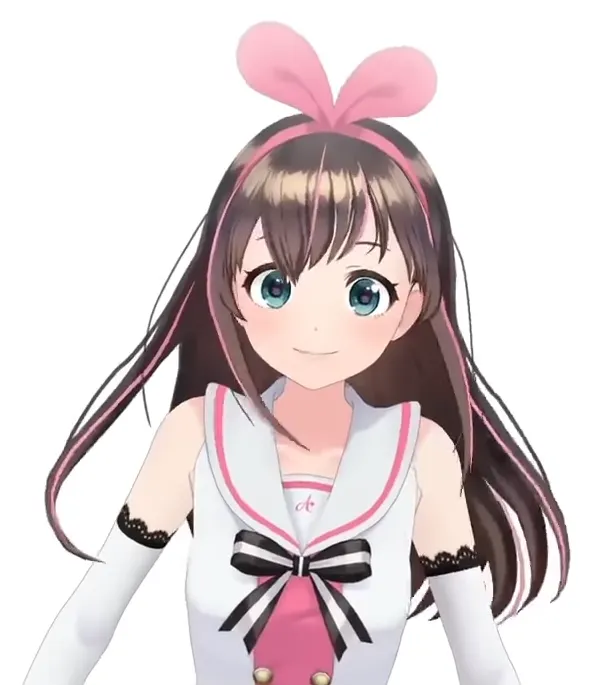
Kizuna AI, Who Has Left Our Side — @Wikipedia
Today, VTubers have grown far beyond Japan and become a global phenomenon. On YouTube alone, VTuber-related content racks up over 50 billion views per year, and VTubers consistently dominate the top ranks of Super Chat earnings as well.
How Do VTubers Move?
For VTubers to speak, smile, and gesture naturally, two main technologies are involved.
1. Motion Capture & Face Tracking
•
Webcams, iPhones, full-body trackers, and motion capture suits are used to track a person’s facial expressions and body movements in real time.
•
This data is then applied to a 2D illustration (Live2D) or a 3D model, making the character appear lively and animated.
In the past, this kind of equipment was expensive and mainly used in films and games, making it inaccessible to most people. Today, however, affordable hardware and software have made it possible for individuals to get started—helping spark the VTuber boom we see now.
2. 2D vs 3D
[Live2D]
•
This method takes a flat 2D illustration and separates it into multiple parts, allowing movements like head turns, blinking, and mouth shapes to appear natural and expressive.
•
Major Japanese agencies such as Nijisanji are credited with establishing today’s live-stream–focused VTuber format by heavily investing in Live2D and live streaming from the early days.
[3D / Cartoon Rendering]
•
This method uses fully 3D models, allowing the camera to move freely in a 3D space and enabling full-body tracking for dances and performances.
•
It’s especially effective for concerts and stage productions, which is why groups like Hololive excel with this approach.
The important thing to remember is that whether a VTuber uses 2D or 3D graphics, they’re all still VTubers. The difference is purely technical—there’s no such thing as a specific “qualification” you need to be a VTuber.
Are There Trends in the VTuber Scene?
The VTuber and virtual idol industry began in Japan and has since expanded worldwide, growing at a rapid pace. One major driver of this growth is the widespread adoption of motion capture, Live2D, and 3D avatar technologies, which have lowered the barrier to entry for both individuals and companies.
As live streaming on platforms like YouTube and Twitch has become the norm, interactive content that allows creators to communicate directly with fans has played a key role in building global fandoms.
Major Japanese agencies such as Hololive and Nijisanji have expanded into English-speaking and Southeast Asian markets, while local VTubers continue to emerge across North America and Europe, turning the scene into a truly multinational ecosystem.
At the same time, advances in AI, VR, and real-time 3D rendering are driving new opportunities—from virtual concerts and brand collaborations to music activities—mirroring business models traditionally associated with real-world idols.

Hololive ― @YouTube
In short, as advancing technology, global platforms, and fan-driven culture come together, VTubers are evolving beyond simple YouTube creators and establishing themselves as a global entertainment industry.
Wait—How Is This Different from Vocaloids?
VTubers are often confused with Vocaloids, so let’s break down the key differences in a simple way.
•
Vocaloids
◦
Vocaloids are primarily voice synthesis programs designed to generate singing voices.
◦
While characters like Hatsune Miku exist, the core focus is the singing synthesis technology itself.
•
VTubers
◦
A real person speaks and reacts behind the character in real time.
◦
The character acts as the creator’s on-screen persona or “face.”
In short, Vocaloids are software, while VTubers are performers—real people paired with virtual characters.
